

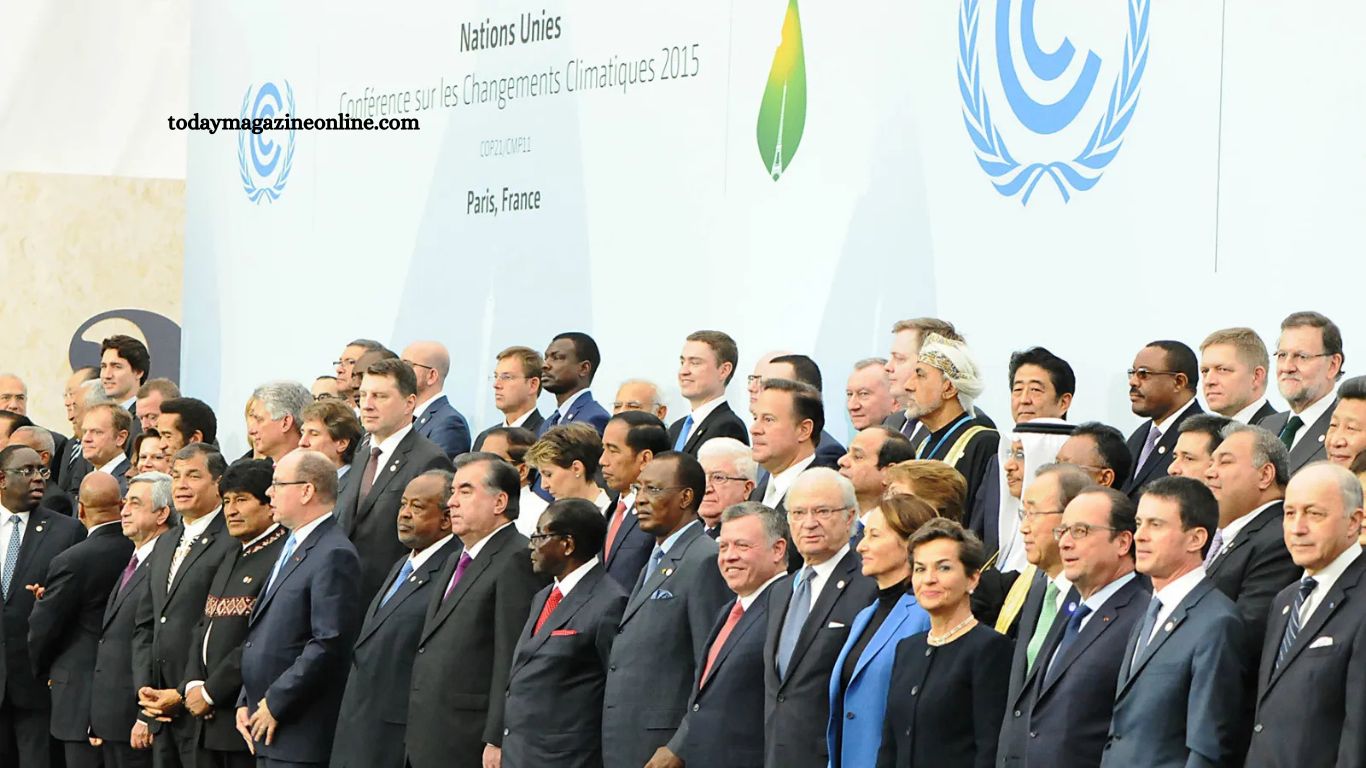
Climate change remains one of the most urgent global challenges. Rising temperatures, extreme weather events, melting glaciers, and sea-level rise are forcing governments to rethink environmental strategies. Around the world, political leaders, scientists, and international organizations are designing policies to slow global warming and protect ecosystems.
Major international agreements, national climate strategies, and technological investments are shaping the future of climate action. Global cooperation, economic reforms, and innovation are becoming central pillars of climate policies.
Read More: The Role of Social Media in Modern Politics
Global Climate Agreements Driving Policy
International agreements play a critical role in shaping national climate policies. The most influential agreement today is the United Nations climate framework, known as the Paris Agreement.
The Paris Agreement focuses on limiting global temperature rise to below 2°C, with an ambitious goal of 1.5°C above pre-industrial levels. Countries participating in the agreement submit climate action plans called Nationally Determined Contributions (NDCs).
Key objectives include:
- Reducing greenhouse gas emissions
- Accelerating renewable energy adoption
- Improving climate resilience
- Supporting developing countries with climate finance
Many world leaders continue strengthening their commitments through climate summits organized by the United Nations Framework Convention on Climate Change.
Net-Zero Emission Targets
One major policy direction among global leaders is the commitment to net-zero emissions. Net-zero means balancing greenhouse gas emissions with removal efforts such as reforestation or carbon capture.
Countries setting long-term net-zero targets include:
- United Kingdom: Net zero by 2050
- Japan: Net zero by 2050
- Canada: Net zero by 2050
- China: Net zero by 2060
Leaders argue that net-zero strategies can transform energy systems while creating new economic opportunities in clean technology sectors.
Renewable Energy Expansion
Many governments are prioritizing renewable energy policies to replace fossil fuels. Solar, wind, hydropower, and green hydrogen are becoming central components of climate strategies.
For example:
- Germany continues expanding wind and solar energy through its Energiewende transition strategy.
- India aims for massive solar capacity growth through its national solar mission.
- United States supports clean energy investment through large climate legislation and infrastructure programs.
Renewable energy policies not only reduce carbon emissions but also strengthen energy security and create green jobs.
Carbon Pricing and Emissions Trading
Another policy tool gaining global attention is carbon pricing. Governments impose a financial cost on carbon emissions to encourage businesses to reduce pollution.
Two common approaches include:
- Carbon Taxes:
Direct price on carbon emissions to discourage fossil fuel use. - Emissions Trading Systems (ETS):
Markets allow companies to trade emission permits.
The European Union operates one of the largest carbon markets, the EU Emissions Trading System, which has significantly influenced industrial emission reductions across Europe.
Climate Finance for Developing Nations
Developing countries often face severe climate impacts while having fewer resources for adaptation. Therefore, climate finance has become a key discussion among world leaders.
Wealthier nations committed billions of dollars through institutions such as:
- Green Climate Fund
- World Bank
- International Monetary Fund
These funds support projects related to renewable energy, climate-resilient infrastructure, and sustainable agriculture in vulnerable regions.
Climate Adaptation and Disaster Preparedness
Climate policies no longer focus only on reducing emissions. Many governments are investing in adaptation strategies to prepare for unavoidable climate impacts.
Key initiatives include:
- Coastal protection infrastructure
- Flood management systems
- Climate-resilient agriculture
- Early warning systems for extreme weather
Island nations and coastal countries are prioritizing adaptation policies due to rising sea levels and increasing storms.
Technology and Innovation
Technological innovation remains essential for achieving global climate goals. Governments are investing heavily in research and development across several fields.
Important technologies include:
- Carbon capture and storage (CCS)
- Electric vehicles (EVs)
- Green hydrogen production
- Advanced battery storage
Organizations such as the International Energy Agency emphasize that rapid innovation will determine whether global climate targets remain achievable.
Challenges Facing Climate Policies
Despite strong commitments, world leaders face significant challenges in implementing climate policies:
- Economic dependence on fossil fuels
- Political disagreements among nations
- Funding gaps for climate projects
- Technological limitations in some sectors
Balancing economic growth with environmental protection continues to be one of the most difficult policy debates.
Future Outlook for Global Climate Action
Climate change policies are evolving rapidly as governments recognize the urgency of the crisis. Future climate strategies will likely focus on deeper emission cuts, faster renewable energy expansion, and stronger international cooperation.
Upcoming global climate conferences under the United Nations framework will continue shaping global environmental governance and long-term sustainability strategies.
Frequently Asked Questions
What does climate change policy mean?
Climate change policy refers to government plans and regulations designed to reduce greenhouse gas emissions and manage climate impacts.
What is the main goal of global climate policies?
The primary goal focuses on limiting global temperature rise and protecting ecosystems from severe climate damage.
What role does the United Nations play in climate action?
United Nations coordinates global climate agreements, international negotiations, and environmental cooperation among countries.
Why is renewable energy important in climate policies?
Renewable energy reduces dependence on fossil fuels and lowers carbon emissions responsible for global warming.
What do net-zero emissions mean?
Net-zero means balancing produced greenhouse gases with removal methods like reforestation or carbon capture.
Why do developing countries need climate finance?
Climate finance helps vulnerable countries build clean energy projects and strengthen climate adaptation infrastructure.
Conclusion
Climate change policies represent a major transformation in global governance and economic planning. Governments, international organizations, and industries are working together to design solutions that reduce emissions, protect ecosystems, and ensure a sustainable future.
