

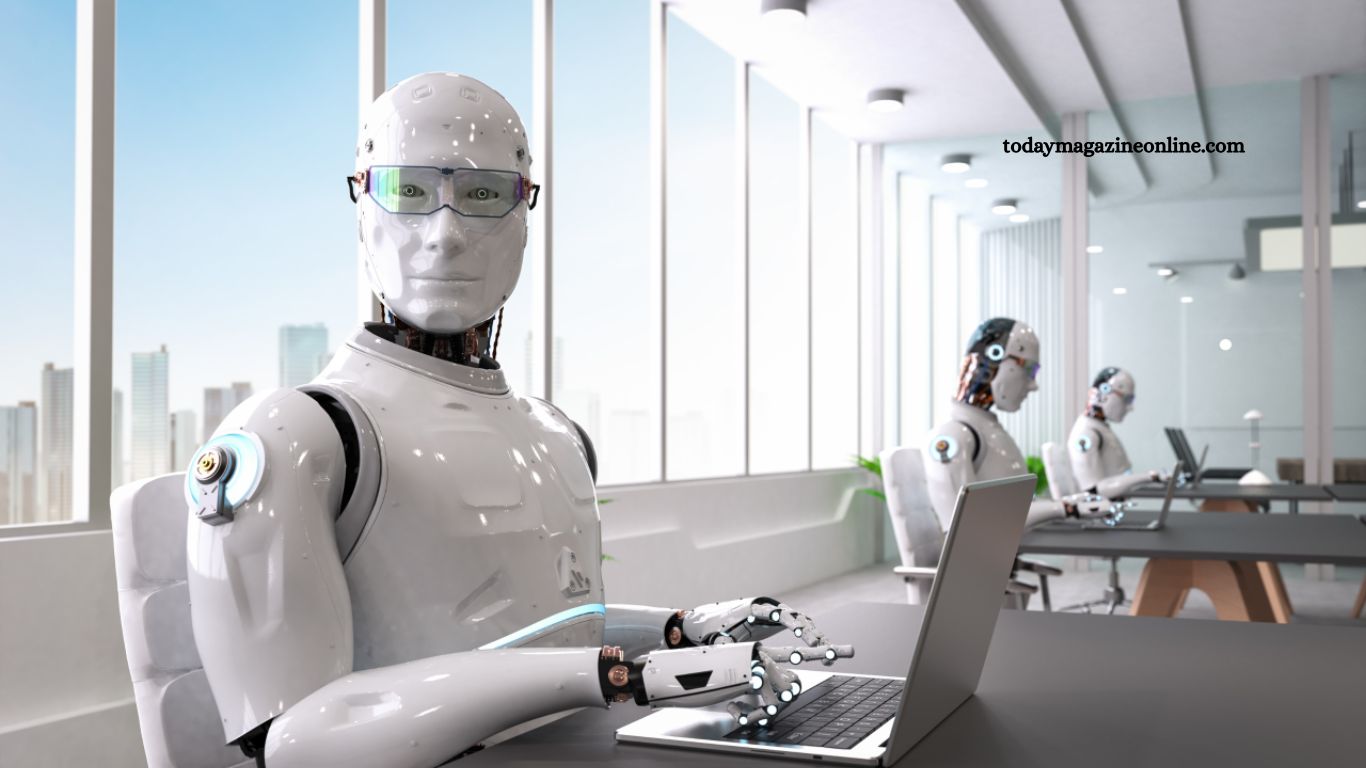
Artificial Intelligence (AI) reshapes modern industries with speed, precision, and intelligence-driven automation. Organizations across healthcare, finance, manufacturing, retail, and transportation adopt AI systems to improve efficiency,
Reduce operational costs and unlock new growth opportunities. Continuous innovation in AI accelerates digital transformation and redefines how businesses operate in competitive markets.
Read More: Top Technology Trends to Watch in 2026
AI Impact on the Healthcare Industry
AI introduces advanced diagnostic tools, predictive analytics, and personalized treatment systems in healthcare. Machine learning models analyze medical data, detect diseases early, and support doctors in clinical decisions.
Robotics-assisted surgeries enhance precision, reduce risk, and improve patient recovery outcomes. AI-powered systems also streamline hospital management, patient scheduling, and medical record processing.
AI Revolution in the Finance Sector
Financial institutions integrate AI for fraud detection, risk management, and algorithmic trading. Intelligent systems analyze transaction patterns in real time, identify suspicious activity, and prevent financial losses.
AI-driven chatbots improve customer service by offering instant responses and personalized financial advice. Investment firms use predictive models to forecast market trends and optimize portfolio performance.
Manufacturing Transformation Through AI
Manufacturing industries benefit from AI-driven automation, predictive maintenance, and smart robotics. Machines equipped with AI sensors monitor production lines, detect faults, and reduce downtime.
Predictive maintenance systems analyze equipment behavior to prevent breakdowns before they occur. Smart factories leverage AI to optimize supply chains, manage inventory, and enhance production efficiency.
Retail Industry Advancement with AI
Retail businesses apply AI for customer behavior analysis, demand forecasting, and personalized shopping experiences. Recommendation engines suggest products based on user preferences and purchase history.
AI-powered analytics help retailers manage inventory, optimize pricing strategies, and improve customer engagement. Virtual assistants and automated support systems enhance online shopping experiences.
Transportation and AI Integration
AI improves transportation systems through autonomous vehicles, traffic management solutions, and route optimization. Self-driving technology enhances road safety and reduces human error.
Intelligent traffic systems analyze real-time data to reduce congestion and improve travel efficiency. Logistics companies use AI to optimize delivery routes and reduce fuel consumption.
Future of AI Innovations
Future AI developments focus on deep learning, natural language processing, and generative intelligence. These advancements will enhance decision-making systems, automate complex tasks,
And improve human-machine interaction. Industries will continue to evolve with AI integration, leading to smarter ecosystems and more efficient global operations.
Frequently Asked Questions
What is Artificial Intelligence?
Artificial Intelligence is technology that enables machines to simulate human intelligence, such as learning, reasoning, and decision-making.
How is AI used in healthcare?
AI helps in disease detection, medical imaging analysis, patient monitoring, and improving treatment accuracy.
Why is AI important in finance?
AI improves fraud detection, automates trading, enhances risk management, and provides better customer service.
How does AI help manufacturing industries?
AI increases efficiency through automation, predictive maintenance, quality control, and smart production systems.
What role does AI play in retail?
AI supports personalized recommendations, inventory management, demand forecasting, and customer support.
Will AI replace human jobs?
AI may automate certain tasks, but it also creates new job opportunities and works alongside human roles.
Conclusion
Artificial Intelligence innovations transform industries by introducing automation, intelligence, and data-driven decision systems. From healthcare to transportation, AI enhances productivity, accuracy, and innovation. Continuous development in AI technology will further shape the future of global industries, creating smarter and more connected digital environments.
