

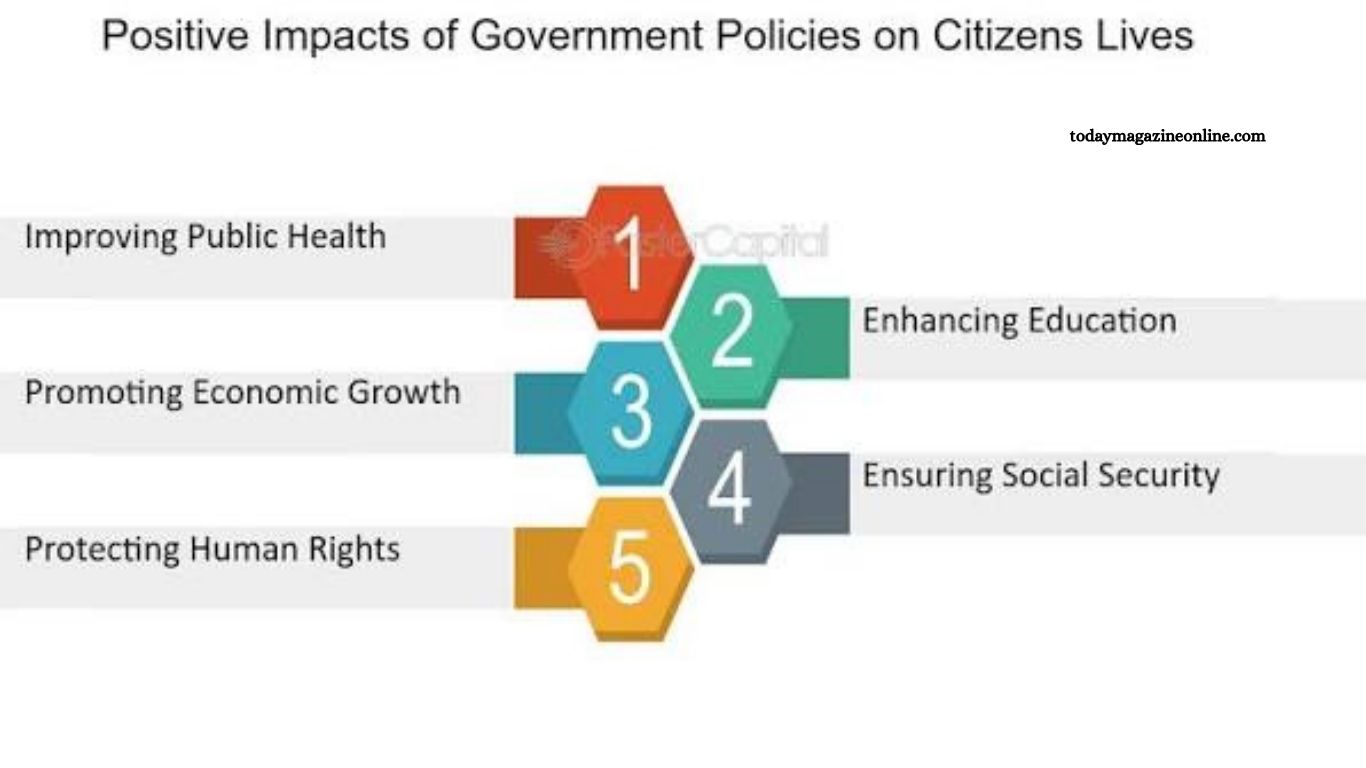
Government policies influence daily life in ways many people may not immediately notice. Decisions made by governments can affect household expenses, employment opportunities, education, healthcare, transportation, taxes, public services, and personal freedoms. Policies create rules and programs that shape how communities operate and how citizens interact with public institutions.
Understanding the impact of government policies helps people make informed decisions and recognize how political choices connect with everyday experiences. From changes in tax rates to investments in public infrastructure, government decisions can create direct and long-term effects for individuals, families, and businesses.
Read More: Latest Political Developments Shaping the Global Landscape
What Are Government Policies?
Government policies are plans, rules, laws, and actions created by public authorities to address social, economic, environmental, and public concerns. Policies can exist at national, regional, or local levels, depending on the government system.
Examples include education policies, healthcare regulations, taxation rules, employment laws, environmental standards, housing programs, and transportation plans. Each policy aims to address a particular issue, although its effects can vary among different groups of citizens.
How Government Policies Affect Household Finances
One of the most noticeable effects of government policy involves household finances. Tax policies influence how much income people keep after taxes, while changes in sales taxes, property taxes, or other charges can affect monthly budgets.
Government decisions also influence prices indirectly. Energy regulations, import policies, subsidies, and agricultural programs can affect production costs and consumer prices. When governments provide financial support for essential services or products, households may experience lower costs. Removing subsidies or introducing new taxes can create additional financial pressure.
Social assistance programs can also support eligible households through income support, food assistance, housing programs, or other benefits.
Impact on Employment and Wages
Employment opportunities are strongly connected with economic and labor policies. Government spending on infrastructure, healthcare, education, and public services can create jobs directly while supporting businesses involved in these sectors.
Minimum wage laws, workplace safety regulations, employee protections, and working-hour rules can influence employment conditions. Tax incentives may encourage companies to invest, expand operations, or hire additional workers.
Trade policies can also affect employment. Reduced trade restrictions may create new opportunities for businesses and workers, while higher tariffs can protect certain domestic industries but potentially increase costs for companies that rely on imported materials.
Government Policies and Education
Education policies influence what students learn, how schools operate, and how educational resources are distributed. Government funding can determine the availability of teachers, classrooms, technology, transportation, and educational programs.
Policies related to tuition fees, scholarships, student loans, vocational training, and higher education funding can affect whether students can afford further education.
Education decisions also influence the workforce over time. Strong investment in schools and skills development can help citizens develop qualifications needed for changing industries and emerging careers.
Effects on Healthcare
Healthcare policy can have a direct effect on access, affordability, and quality of medical services. Governments decide how public healthcare systems are funded and establish regulations for hospitals, medicines, insurance providers, and medical professionals.
Changes in healthcare programs can influence how much individuals pay for treatment, prescriptions, insurance, and preventive services. Public health policies can also address issues such as vaccination, sanitation, disease prevention, food safety, and emergency preparedness.
Effective healthcare policies can improve access to essential services, while poorly designed policies may create financial or administrative challenges for citizens.
Transportation and Public Infrastructure
Government investment plays a major role in transportation and infrastructure. Roads, bridges, public transit systems, airports, water networks, electricity infrastructure, and public facilities often depend on government planning and funding.
When authorities invest in reliable infrastructure, citizens can benefit from shorter travel times, improved connectivity, safer roads, and better access to workplaces and essential services.
Infrastructure policies can also influence property values and business development. A new highway, transit station, or commercial connection can change how neighborhoods develop over several years.
Housing and Cost of Living
Housing policies can influence rental prices, homeownership opportunities, construction, and urban development. Governments may introduce zoning rules, housing subsidies, tax incentives, rent regulations, or affordable housing programs.
Interest-rate policy also affects borrowing costs and can influence mortgage affordability. When borrowing becomes more expensive, potential homebuyers may delay purchases. Lower borrowing costs can make financing more accessible, although increased demand can also place pressure on housing prices. Housing policy therefore affects both homeowners and renters, especially in rapidly growing cities.
Environmental Policies and Everyday Life
Environmental regulations influence many everyday activities. Rules concerning pollution, waste management, vehicle emissions, energy production, and industrial operations can affect businesses and consumers.
For example, stricter vehicle-emission standards may encourage cleaner transportation technologies. Renewable energy incentives can support the development of solar and wind power, while environmental taxes or regulations may increase costs for certain industries.
Although environmental policies can create short-term adjustment costs, they are often designed to address long-term concerns such as air pollution, climate risks, and resource conservation.
How Government Policies Affect Businesses
Government decisions influence the environment in which businesses operate. Corporate taxes, licensing requirements, labor regulations, trade rules, consumer protection laws, and environmental standards can affect operating costs and investment decisions.
Small businesses may be particularly sensitive to changes in regulations because they often have fewer resources available for compliance. At the same time, clear regulations can create a more predictable business environment and protect companies from unfair competition.
Government incentives can also encourage investment in specific industries, technologies, or regions.
Public Safety and Personal Rights
Government policies also shape public safety and individual rights. Laws establish standards for policing, criminal justice, data protection, consumer rights, workplace safety, and public security.
Citizens may experience these policies through rules governing traffic, online privacy, financial transactions, public spaces, and access to government services.
A balance between public safety and individual freedoms remains an important part of policymaking. Policies that affect personal rights can have significant social consequences and often receive extensive public debate.
Why Policy Changes Can Affect Different People Differently
Government policies rarely affect everyone in the same way. A tax change may benefit one household while increasing costs for another. A new business regulation may protect workers while increasing operating expenses for employers.
Age, income, occupation, location, family size, and access to public services can all influence how citizens experience a policy. Understanding these differences is important when evaluating whether a government program has achieved its intended goals.
The Importance of Citizen Participation
Citizens have several ways to participate in policymaking. Voting, contacting elected representatives, attending public meetings, joining community organizations, and participating in public consultations can help people express their views.
Staying informed also matters. Understanding proposed laws and government programs allows citizens to evaluate potential benefits, costs, and long-term effects.
Active participation can encourage greater transparency and accountability while helping governments understand the needs of different communities.
How to Understand Government Policies
Following reliable news sources, official government announcements, public reports, and policy documents can help citizens understand important changes. It is also useful to compare information from multiple credible sources rather than relying on social media posts or unverified claims.
Citizens should pay attention to the purpose of a policy, who qualifies for benefits, who carries the costs, when changes take effect, and how the policy may affect different groups.
Frequently Asked Questions
How do government policies affect daily life?
Government policies affect taxes, healthcare, education, employment, transportation, housing, and public services.
How do government policies affect the economy?
Policies influence business activity, employment, investment, prices, wages, and consumer spending.
Can government policies affect household expenses?
Yes. Tax changes, subsidies, regulations, and economic policies can increase or reduce household costs.
How do policies affect education?
Education policies determine school funding, curriculum standards, scholarships, tuition support, and access to learning opportunities.
Why are healthcare policies important?
Healthcare policies influence medical costs, insurance coverage, healthcare access, public health programs, and service quality.
How can citizens influence government policies?
Citizens can vote, contact representatives, join community groups, attend public meetings, and participate in public consultations.
Conclusion
Government policies influence everyday citizens through taxes, employment, education, healthcare, housing, transportation, infrastructure, environmental regulations, and public services. Some effects appear immediately, while others develop gradually through economic and social changes. Understanding these policies allows citizens to make better financial and personal decisions while participating more effectively in public life.

1 Comment
Pingback: The Future of Politics in a Digital World - Today Magazine Online