

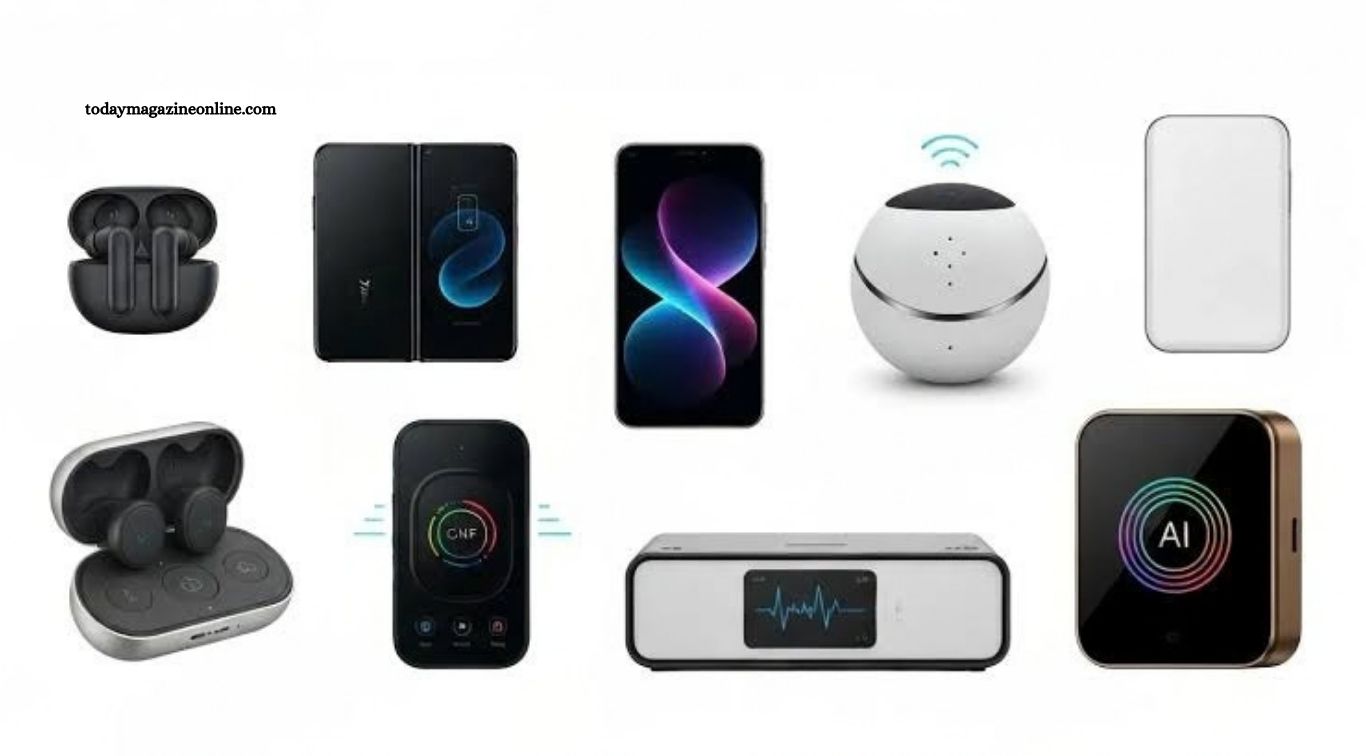
Technology continues to evolve at a remarkable pace, bringing new gadgets and smart devices designed to make everyday life easier, faster, and more connected. From intelligent wearables and advanced smartphones to smart home products and innovative personal devices, the latest technology focuses on convenience, performance, portability, and smarter experiences.
New gadgets are no longer limited to basic entertainment or communication. Modern devices can monitor health and fitness, improve productivity, automate household tasks, enhance gaming, and provide powerful tools for work and creativity. Understanding the latest gadgets can help consumers identify useful technology instead of spending money on products that offer little practical value.
Read More: AI Technology Trends Businesses Are Watching Closely
Smart Gadgets Are Becoming More Useful
The latest generation of smart gadgets is designed around everyday needs. Manufacturers are adding artificial intelligence, improved sensors, wireless connectivity, and better battery technology to create devices that can respond more intelligently to users.
Smart assistants are becoming more capable, while connected devices can communicate with smartphones, computers, televisions, and home networks. This growing ecosystem allows users to control multiple devices through a single platform, creating a more seamless digital experience.
Latest Smartphones Offer More Than Better Cameras
Smartphones remain among the most important gadgets for modern users. New models increasingly combine powerful processors, advanced displays, improved cameras, longer battery life, and artificial intelligence features in a single device.
Modern smartphones can assist with photography, translation, writing, productivity, navigation, entertainment, and communication. AI-powered editing tools can improve images, summarize information, organize content, and provide personalized assistance. Foldable phones are also expanding smartphone design possibilities by offering larger displays without requiring a traditional tablet-sized device.
Smartwatches Continue to Evolve
Smartwatches have moved beyond displaying notifications and tracking steps. Newer models provide a wider range of fitness, communication, and lifestyle features while offering improved displays and battery efficiency.
Many smartwatches can track workouts, monitor activity, provide navigation, control music, and connect with smartphones. Advanced sensors also allow compatible devices to provide useful wellness information. Their compact design makes them particularly useful for people who want quick access to important information without constantly reaching for a phone.
Wireless Earbuds Are Getting Smarter
Wireless earbuds have become essential accessories for smartphones, laptops, and tablets. Newer models focus on better sound quality, stronger noise cancellation, improved microphones, and longer battery life.
Active noise cancellation can reduce unwanted background sounds, making earbuds useful during travel, work, exercise, or daily commuting. Some premium models also introduce spatial audio and adaptive sound features that create a more immersive listening experience.
Smart Home Devices Make Daily Tasks Easier
Smart home technology continues to expand with connected lights, security cameras, smart displays, thermostats, locks, plugs, and household appliances. These products allow users to automate common tasks and control devices remotely.
Smart home gadgets can be managed through mobile applications, voice commands, or automated routines. For example, users can schedule lights, monitor security cameras, adjust temperature settings, or turn connected appliances on and off from a smartphone.
The biggest advantage is convenience. Instead of operating every device manually, users can create routines that perform multiple actions automatically.
Portable Gaming Devices Are Growing in Popularity
Portable gaming devices are another category worth watching. Modern handheld gaming systems provide significantly more processing power than older portable consoles, allowing users to play demanding games away from a traditional desktop or television.
Many handheld gaming devices now offer high-resolution displays, ergonomic controls, fast processors, and large storage options. Some products also support PC gaming libraries, giving players access to a much broader selection of games.
Cloud gaming and faster wireless connectivity are further expanding what portable gaming devices can offer.
AI Is Changing Everyday Gadgets
Artificial intelligence is becoming one of the biggest trends across consumer electronics. Instead of remaining limited to computers and specialized software, AI features are increasingly appearing inside smartphones, laptops, cameras, headphones, smart home products, and wearable devices.
AI can help gadgets understand voice commands, recognize objects, improve photos, organize information, personalize recommendations, and automate repetitive tasks. These capabilities can make devices easier to use while reducing the number of manual steps required to complete everyday activities.
However, consumers should look beyond AI marketing claims. A useful AI feature should solve a genuine problem rather than simply add another feature to a product specification sheet.
New Laptops Focus on Performance and Efficiency
Laptops continue to become thinner, lighter, and more powerful. New processors are improving performance while focusing on energy efficiency, allowing manufacturers to create portable computers with better battery life.
Modern laptops are increasingly designed for multiple use cases. Students can use them for research and learning, professionals can handle demanding productivity workloads, while creators can edit photos, videos, and other digital content.
AI-ready laptops are also becoming more common. Dedicated processing hardware can handle certain AI tasks locally, potentially improving performance and reducing dependence on cloud-based processing.
Smart Glasses Offer a New Way to Access Information
Smart glasses are an emerging category attracting attention from technology companies and consumers. Unlike traditional displays, these devices can place digital information closer to the user’s natural field of view.
Depending on the product, smart glasses may support cameras, audio, voice assistants, navigation, communication, and other connected features. Future developments could make augmented reality more practical for education, work, travel, entertainment, and everyday communication.
The technology is still developing, but smart glasses represent an interesting direction for wearable computing.
Better Charging Technology Improves Convenience
Charging accessories may not seem as exciting as smartphones or smart glasses, but they play an important role in modern technology. Faster chargers, wireless charging systems, power banks, and multi-device charging stations are becoming increasingly useful.
USB-C has also become an important standard across many electronic products, helping users reduce the number of different cables and chargers required. Portable power banks with higher capacities can provide additional power for smartphones, tablets, gaming devices, and other electronics while traveling.
What to Consider Before Buying a New Gadget
New technology can be exciting, but buying the latest device simply because it is new is not always the best decision. Consumers should consider how frequently they will use the product and whether its features provide meaningful benefits.
Battery life, compatibility, software support, durability, repairability, privacy, and long-term value are also important factors. A slightly older device with reliable performance can sometimes provide better value than a newly released product with unnecessary features.
The Future of Consumer Technology
The future of gadgets will likely focus on smarter software, more efficient hardware, connected ecosystems, and increasingly personalized experiences. Artificial intelligence, wearable technology, advanced displays, faster connectivity, and improved batteries will continue influencing product development.
Consumers can expect technology to become less noticeable while becoming more integrated into everyday activities. The most successful gadgets will not simply provide more features; they will make complicated tasks easier and deliver useful technology without creating unnecessary complexity.
Frequently Asked Questions
What are the latest gadgets worth knowing about?
Smartphones, smartwatches, wireless earbuds, AI-powered devices, smart home products, laptops, and portable gaming systems are among the major gadget categories to watch.
How is AI changing modern gadgets?
AI helps devices improve photography, voice assistance, productivity, personalization, automation, and other everyday functions.
Are smartwatches still useful?
Yes. Modern smartwatches provide fitness tracking, notifications, communication, navigation, and various lifestyle features.
Are smart home devices worth buying?
They can be useful for people who want automation, remote control, improved convenience, and better management of connected household devices.
What should I check before buying a new gadget?
Consider performance, battery life, compatibility, software support, durability, privacy, price, and how useful the device will be in your daily routine.
Will future gadgets become more AI-focused?
AI is expected to remain a major technology trend, with manufacturers integrating intelligent features into more consumer devices.
Conclusion
New gadgets and devices are changing how people communicate, work, relax, exercise, travel, and manage their homes. Smartphones, smartwatches, wireless earbuds, gaming devices, laptops, smart home products, and AI-powered technology are all becoming more capable and interconnected. The best gadget is not necessarily the newest or most expensive option. Practical features, reliable performance, useful software, strong battery life, and long-term value matter more.

1 Comment
Pingback: How AI-Powered Technology Is Reshaping Daily Tasks - Today Magazine Online