

By Dr.Plus Healthcare Team
Waking up with a fever and a sore throat is miserable enough without having to drive to a clinic, find parking and sit in a waiting room. For many families in the UAE, a home doctor consultation offers a different route: the doctor comes to you. It can be especially helpful for young children, older relatives and anyone who feels too unwell to travel.
Still, many people are unsure what actually happens when a doctor visits. This guide walks through the process, from booking to follow-up, and explains when a home visit is suitable and when it is not.
What Is a Home Doctor Consultation?
A home doctor consultation is a medical appointment held at your residence instead of a clinic. A licensed doctor travels to your home, hotel or workplace, assesses your symptoms and gives medical advice, sometimes with prescriptions or referrals. Some providers describe this as a doctor home visit, while others use terms such as visiting doctor services or home healthcare services.
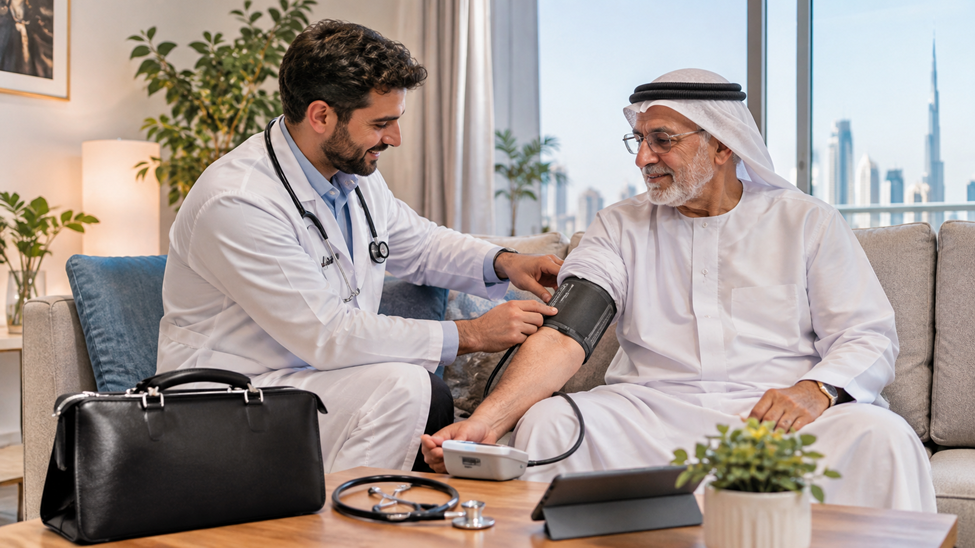
The main difference from a clinic visit is the setting. At home, the doctor carries portable equipment such as a stethoscope, thermometer, blood pressure monitor and pulse oximeter, so the range of tests is narrower than in a hospital. In return, you are in familiar surroundings, and the doctor can see your living environment, which sometimes offers useful clues about your health.
How Does a Home Doctor Consultation Work?
Booking and Sharing Your Symptoms
You usually book by phone, website or messaging app, and give your address, the patient’s age and the main symptoms. The provider may ask about allergies, current medicines and long-term conditions so that the right doctor is sent. Mentioning anything that feels severe, such as breathing trouble, lets the team advise you to seek emergency care instead.
Assessment and Examination
When the doctor arrives, they confirm the patient’s details and ask questions about the symptoms: when they started, how they have changed and what makes them better or worse. A physical examination follows. Depending on the complaint, this may include checking temperature, heart rate, blood pressure and oxygen levels, looking at the throat or ears, listening to the chest and feeling the abdomen.
Advice, Treatment and Follow-Up
After the examination, the doctor explains what they think is causing the problem and what to do next. This might include rest and fluids, prescribed medication, or a plan for monitoring symptoms at home. If the picture is unclear, the doctor may recommend blood tests, imaging or a visit to a clinic or hospital for further investigation. Many providers also arrange a follow-up call or visit, so ask what to expect.
What Conditions Can Be Assessed at Home?
Many everyday illnesses can be assessed during a medical consultation at home. Residents looking for a doctor on call Dubai often need help with fever and flu symptoms, cough and sore throat, body aches, headaches, ear pain or mild stomach upset such as vomiting or diarrhoea. Doctors can also assess symptoms of a urinary tract infection and minor skin conditions or rashes, and carry out follow-ups for stable chronic conditions such as diabetes or high blood pressure.
Suitability always depends on the patient’s condition and the doctor’s clinical judgment. Some problems need an examination, scan or procedure that cannot be done safely at home, and a good doctor will say so and refer you onward rather than treat everything on the spot.
What Should You Prepare Before the Doctor Arrives?
A little preparation makes the visit more useful. Gather any recent medical reports, test results and discharge summaries, along with a list of current medicines, including doses, supplements and over-the-counter products. Note the patient’s allergies and relevant medical history, such as previous surgeries or long-term conditions.
Write down the symptoms and how long they have lasted, plus any readings you have taken at home, such as temperature. Finally, prepare questions in advance, for example how long recovery should take or which signs mean you should seek help sooner. Keep an identity document and insurance details nearby, and make sure the patient is in a quiet, well-lit room.
How to Choose a Reliable Home Healthcare Provider
Residents comparing doctor consultation services in Dubai should begin with licensing, because home visit options and the consultation process can differ between providers. In Dubai, the Dubai Health Authority (DHA) sets standards for home healthcare providers [1], and its online registry lets you check that a doctor or facility holds an active licence [2]. Ask for the doctor’s name and licence number before the visit.
Beyond licensing, look for qualified doctors with relevant experience, and clear information about services, fees and what can and cannot be treated at home. A trustworthy provider explains upfront which situations need hospital care.
Privacy matters too. Your medical details should be recorded and stored securely, and the provider should explain how it handles your information. Finally, check communication: you should know how to reach the clinic after the visit, how prescriptions and reports will be shared and who to call if symptoms worsen.
Benefits of Home Doctor Consultations
The most obvious benefit is convenience: no travel, no waiting room and no need to arrange time off to take a child to a clinic. Sick people can stay in bed, and parents do not have to bring an unwell toddler into a room full of other patients.
Home visits can also feel more personal because the consultation is focused on one patient in a calm setting. For older adults and people with limited mobility, avoiding transport can make care easier to access. When the same provider is involved over time and keeps clear records, home consultations can support continuity of care, particularly for people managing long-term conditions.
When Is a Home Consultation Not Enough?
Home visits are for non-emergency care. Some symptoms need an ambulance and a hospital, and waiting for an appointment can be dangerous. Call 998 for an ambulance anywhere in the UAE [3] if someone has severe difficulty breathing, chest pain or pressure, loss of consciousness, or any sign of a stroke.
The NHS advises calling emergency services for chest pain that feels tight or squeezing or spreads to the arms, neck or jaw [4]. Stroke signs include a drooping face, weakness in one arm and slurred speech, and the NHS says to seek emergency help even if symptoms have passed [5]. Do not wait for a home doctor in these situations; make the emergency call first.
What to Expect and Why the Right Care Matters
A home doctor consultation follows a familiar path: a booking, a conversation about symptoms and history, a focused examination, practical advice and, where needed, further tests or follow-up. It works well for many routine problems and for people who find travel difficult, but it is not a substitute for emergency care.
Whatever service you use, check the licence, prepare your information and know when to call 998. Good preparation and the right provider help you get safe, appropriate care.
