

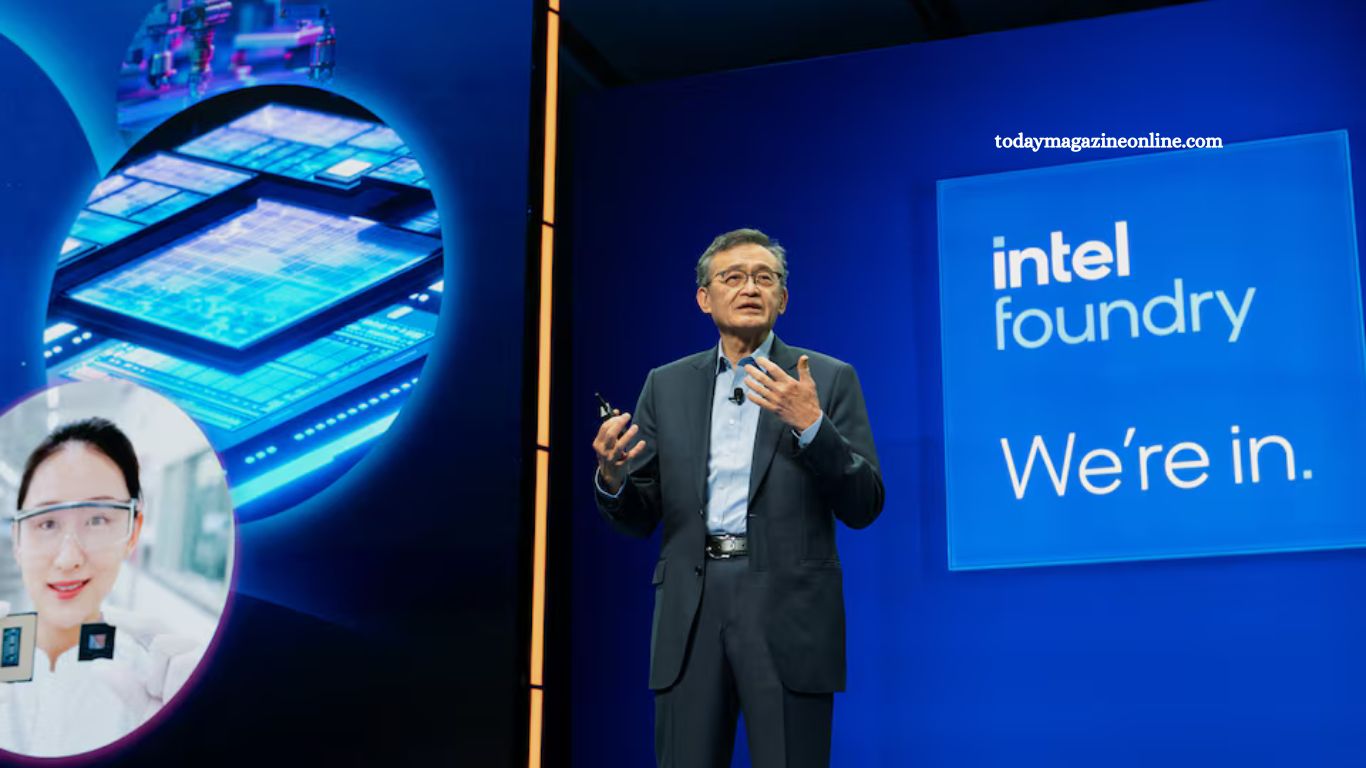
When Lip-Bu Tan accepted the top job at Intel, he inherited a company struggling to reclaim its former dominance in the global semiconductor industry. What he did not expect was to become the target of a public rebuke from the President of the United States—before the two men had ever met.
Within weeks, Tan would turn that political crisis into one of the most consequential deals of his career, securing billions in U.S. government investment and repositioning Intel as a strategic national asset.
Read More: Japan Develops 10nm Nanoimprint Technology, Offering Alternative to EUV Lithography
A Pre-Dawn Attack from the White House
On an August morning before dawn in Silicon Valley, President Donald Trump took to his Truth Social platform with a blunt message: Intel’s new chief executive was “highly conflicted” and should resign immediately. The charge stemmed from Tan’s long history as a venture capitalist with extensive investments in China—an issue that resonated sharply with the administration’s national security concerns.
At the time, Tan had not cultivated a close relationship with Trump. While leaders from Nvidia, AMD, Amazon, Google, and OpenAI had made high-profile visits to the former president, Tan had remained focused on internal restructuring at Intel, deprioritizing Washington politics in his early months.
Scrambling for Access — and a Pivotal Meeting
Trump’s public attack forced Intel into action. Within days, the company moved to secure a meeting at the White House. The result was a roughly 40-minute Oval Office conversation that would reshape Intel’s future.
Before the meeting, Tan leaned on trusted allies—including Microsoft CEO Satya Nadella and Nvidia CEO Jensen Huang—to vouch for his credibility. He also prepared to confront questions about his China-linked investments head-on, framing his personal narrative as an American success story and emphasizing his commitment to U.S. technological leadership.
The meeting included only two cabinet officials: Commerce Secretary Howard Lutnick and Treasury Secretary Scott Bessent. Trump pressed Tan on how he intended to revive Intel, a company that had fallen behind foreign rivals such as Taiwan Semiconductor Manufacturing Co. in advanced chip production.
A New Model for Industrial Policy
Rather than accepting traditional government grants under the CHIPS Act, Tan agreed to a novel arrangement: additional federal funding in exchange for an equity stake in Intel. The deal delivered $5.7 billion in cash and positioned the U.S. government as Intel’s largest shareholder, giving the company an aura of being “too strategic to fail.”
The agreement also signaled a broader shift in U.S. industrial policy—one in which Washington takes ownership stakes in companies deemed vital to national security. Intel’s share price surged nearly 80% following Tan’s appointment, outpacing both the S&P 500 and Nvidia.
Deal Momentum and Political Capital
The White House agreement unlocked further opportunities. Within weeks, Intel secured a $5 billion investment from Nvidia, cementing a partnership with the world’s leading AI chip designer. Trump publicly celebrated the deal, highlighting the appreciation of the government’s stake in Intel.
SoftBank soon followed with a $2 billion investment, adding to the sense that Intel had regained political and financial momentum. For potential partners, aligning with Intel increasingly meant aligning with U.S. government priorities.
The Venture Capitalist at the Helm
Born in Malaysia and trained initially in hard sciences, Tan built his career in Silicon Valley as a venture capitalist with a reputation for spotting winners. Over four decades, he amassed a personal fortune exceeding $500 million and earned acclaim for guiding startups to successful exits.
That dealmaking expertise has served Intel well—but not without controversy. Critics inside and outside the company question whether Tan possesses the engineering depth required to lead one of the world’s most complex chip manufacturers. Others point to conflicts of interest tied to his extensive venture portfolio, which have already drawn scrutiny from Intel’s board.
Reshaping Intel from the Inside
Since taking over, Tan has moved aggressively to cut costs and flatten Intel’s bureaucracy. The company has announced layoffs affecting roughly 15% of its workforce, with a particular focus on management layers. Tan has bypassed traditional hierarchies to engage directly with engineers and elevated longtime Intel technologist Pushkar Ranade to interim chief technology officer.
At the same time, Intel continues to burn cash building new fabrication plants, a bet that will require tens of billions of dollars and flawless execution to succeed.
A Lifeline, Not a Cure
For now, the U.S. investment has stabilized Intel and restored confidence among investors and policymakers. Industry lobbyists describe the deal as a “lifeline,” arguing that without it, Intel could have faced leadership turmoil and deeper financial strain.
Yet challenges remain. Intel’s manufacturing unit continues to struggle with yields, and Nvidia has paused efforts to test Intel’s advanced 18A production process. While interest in Intel’s next-generation 14A technology is growing, success is far from guaranteed.
Frequently Asked Questions
Who is Lip-Bu Tan?
Lip-Bu Tan is the Chief Executive Officer of Intel and a longtime Silicon Valley venture capitalist. He has decades of experience investing in semiconductor and technology startups and has served on the boards of major tech companies before becoming Intel’s CEO.
Why did President Trump criticize Intel’s CEO?
President Donald Trump publicly criticized Tan due to his historical investments in Chinese companies, some of which had links to China’s military sector. The president questioned whether those ties represented a conflict of interest for the leader of a major U.S. semiconductor company.
Had Trump and Tan met before the criticism?
No. At the time of Trump’s public remarks, the two had never met. Unlike other major technology executives, Tan had not made early efforts to engage directly with Trump after becoming Intel’s CEO.
How did Intel respond to Trump’s attack?
Intel quickly sought a meeting with the president. The situation culminated in a high-level Oval Office meeting where Tan addressed concerns about his background and outlined his strategy for reviving Intel.
What was the outcome of the White House meeting?
The meeting resulted in a landmark deal in which the U.S. government agreed to invest billions of dollars in Intel in exchange for an equity stake of nearly 10%, making the government Intel’s largest shareholder.
Why did the U.S. government take an ownership stake in Intel?
The administration viewed Intel as a strategic national asset critical to U.S. semiconductor independence and national security. Taking equity was seen as a way to protect taxpayer interests while strengthening domestic chip manufacturing.
Conclusion
Lip-Bu Tan’s rise at Intel underscores the growing intersection of technology, geopolitics, and industrial policy. By transforming a political crisis into a strategic partnership with the U.S. government, Tan bought Intel time—and relevance. Whether that lifeline becomes a full-scale revival will depend not on dealmaking alone, but on Intel’s ability to execute in an unforgiving, highly technical industry.
