

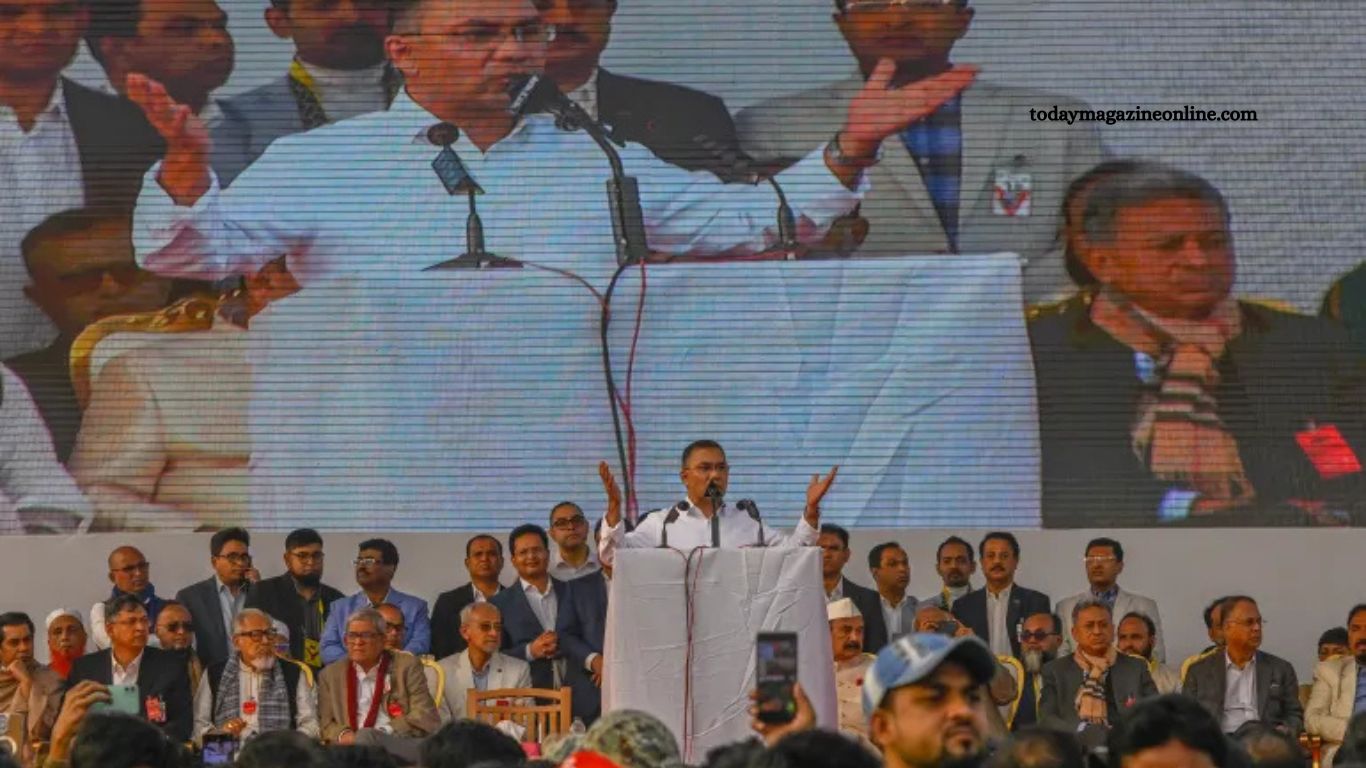
Dhaka, Bangladesh — Amid a sea of supporters on the outskirts of Dhaka, Tarique Rahman, acting chairman of the Bangladesh Nationalist Party (BNP), returned to the country after 17 years in exile, declaring he had “a plan for the people and for the country.”
The son of critically ill BNP chairperson and former Prime Minister Khaleda Zia arrived from Britain on Thursday, drawing tens of thousands of supporters to welcome him home.
“We want peace,” Rahman said. “We have people from the hills and the plains – Muslims, Hindus, Buddhists, and Christians. We want a safe Bangladesh, where every woman, man, and child can leave home safely and return safely.”
His return comes amid growing political uncertainty in Bangladesh, following the assassination of youth leader Osman Hadi and with a national election scheduled for February 2026. The BNP has long been viewed as a leading contender, with Rahman considered a strong candidate for prime minister.
However, escalating violence, including attacks on media offices and the lynching of a Hindu man, had raised concerns that the election could be disrupted. Analysts now suggest Rahman’s return may help stabilize the political environment.
Read More: Seniors on Multiple Medications May Face Unexpected Health Challenges
From Uncertainty to Stability
With his mother, Khaleda Zi, critically ill, Rahman’s return had been long anticipated, yet uncertain. His arrival now clarifies the BNP’s leadership ahead of the elections.
Asif Mohammad Shahan, a professor of development studies at the University of Dhaka, said Rahman’s presence could “reduce uncertainty about the election and create a sense of stability the country is seeking.”
“If he takes a firm stance against extremism, addresses public concerns, and demonstrates readiness to govern while consolidating party control, the political situation will improve significantly,” Shahan said. “If not, things could deteriorate.”
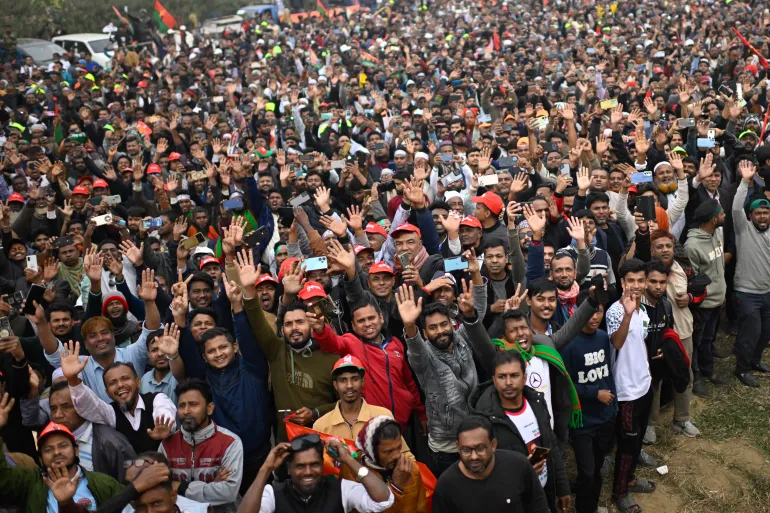
Mubashar Hasan, a researcher at the Humanitarian and Development Research Initiative (HADRI) at Western Sydney University, noted that the public enthusiasm for Rahman suggests his appeal may extend beyond traditional BNP supporters.
People’s interest in his return spans all walks of life. Many see the party as a stabilizing force amid the chaos since former Prime Minister Sheikh Hasina fled to India in August 2024.
The massive rally also highlighted the BNP’s organizational strength. For many, Rahman’s long exile—during which he faced multiple convictions under a military-backed caretaker government—adds to his perceived legitimacy as a leader who has endured political adversity.
The Return of the Son
After the BNP lost power in 2006, Rahman faced a series of legal challenges, from corruption to murder charges, widely publicized during Sheikh Hasina’s government. Despite this, he maintained control of his party. The 2024 political upheaval and subsequent dropping or staying of his convictions opened the path for his return.
“Tarique Rahman’s defining trait as a politician is his focus on policy,” said US-based geopolitical columnist Shafquat Rabbee. “In his speech, he repeatedly emphasized that he has a plan, signaling he intends to govern with clear direction.”
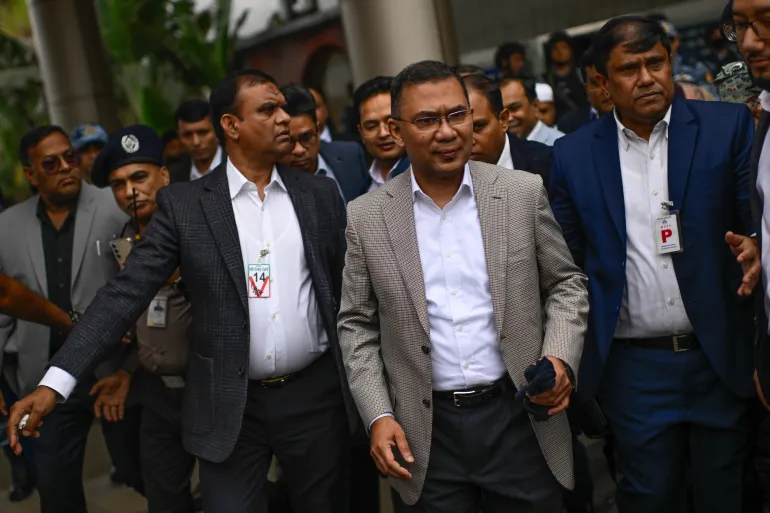
A key aspect observers will watch closely is Rahman’s approach to India. Historically, BNP-India relations have been cautious, with India favoring Sheikh Hasina’s Awami League. The BNP’s past alliance with Jamaat-e-Islami, an Islamist party wwith acontroversial history, further strained ties.
In recent months, however, the BNP has taken a more centrist stance, breaking with Jamaat and promoting a “Bangladesh First” approach. Analysts believe Rahman will likely maintain pragmatic relations with India.
“India’s baseline assumption with Tarique back is that there will finally be an adult in the room with political muscle to negotiate,” Rabbee said.
Energizing the Party Base
Recent political surveys show the BNP and Jamaat running close in the lead-up to February’s election, with many voters undecided. Rahman’s return is expected to boost the BNP’s base and sway undecided voters.
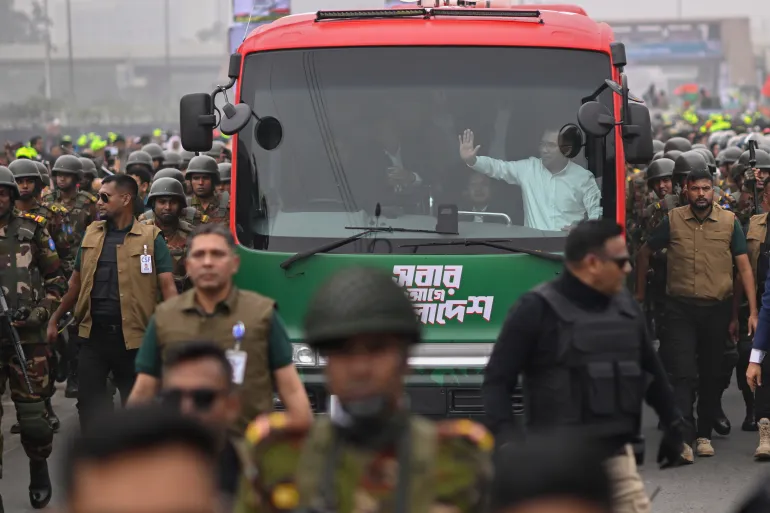
“His presence will energize supporters and could lead to a ‘wave’ election for the BNP,” Shahan said. “But success will depend on his ability to connect with people, reassure them, and chart a clear path for reform and democratic transition.”
Tarique Rahman’s homecoming is more than a political moment; it may well determine the trajectory of Bangladesh’s next election and the country’s fragile stability.
Frequently Asked Questions
Who is Tarique Rahman?
Tarique Rahman is the acting chairman of the Bangladesh Nationalist Party (BNP) and the son of former Prime Minister Khaleda Zia. He has been a prominent political figure in Bangladesh and has lived in exile in Britain since 2008.
Why did Tarique Rahman live in exile?
Rahman faced a series of legal convictions, including charges of corruption and murder, under a military-backed caretaker government and subsequent governments. These convictions, some in absentia, led him to leave Bangladesh in 2008.
Why is his return significant now?
His return comes ahead of the February 2026 national elections, at a time of political instability and violence in Bangladesh. Rahman’s homecoming strengthens the BNP’s position, signals leadership continuity, and could influence voter sentiment.
How did the public respond to his return?
Tens of thousands of supporters gathered at rallies to welcome him, reflecting widespread enthusiasm and suggesting support beyond traditional BNP voters. The rally also demonstrated the BNP’s organizational strength.
What are Tarique Rahman’s main political goals?
Rahman has emphasized a plan for stability, peace, and security in Bangladesh. He has highlighted the importance of unity among religious communities, democratic governance, and addressing extremism.
How could his return impact Bangladesh’s elections?
Analysts suggest Rahman could energize the BNP’s base, sway undecided voters, and increase the party’s chances of a strong electoral performance. His leadership may also reduce political uncertainty ahead of the polls.
Conclusion
Tarique Rahman’s return to Bangladesh is more than a homecoming—it is a pivotal moment in the nation’s political landscape. Arriving amid heightened tensions and an impending national election, his presence strengthens the BNP, energizes supporters, and introduces a sense of stability at a critical juncture.
