

At the end of a busy shift, draining a fryer can feel like one more task on a long closing list. Yet what happens next affects employee safety, cleaning workload, plumbing risk, storage conditions, and the kitchen’s ability to recover a useful material. A consistent process begins by treating used cooking oil as a separate waste stream, not as ordinary trash.
For kitchens that want to understand the collection side of the process, https://gfcommodities.com/ outlines how commercial used-oil disposal and pickup can fit into a broader recovery routine. The best results still start inside the kitchen, with safe transfers, clean containers, clear responsibilities, and regular checks.
Why Oil Recovery Matters
Used fryer oil is easier to manage when everyone understands its path from the fryer to the collection container. A clean, planned routine helps keep hot liquids away from employees and busy walkways. It can also reduce the chance that oil reaches sinks, floor drains, or areas where it creates slippery surfaces and difficult cleanup work. Since disposal requirements can differ by city, county, and state, managers should confirm the rules that apply to their facility.
What Happens To Used Cooking Oil?
Recovered cooking oil is oil and fat removed from fryers or other food-production equipment after use. It is different from grease-trap material, which often contains wastewater, food residue, and sludge. In commercial recovery, fryer oil is often called yellow grease, while grease-trap material is commonly referred to as brown grease. Keeping these streams separate matters because excess water, food scraps, detergents, and chemicals can make fryer oil harder to recover and process.
After cooling and transfer, the oil is held in a designated container until collection. It may then be filtered and processed to remove water and solids before being directed to an appropriate end market. Kitchen staff do not need to manage that entire supply chain, but they do control the most important early steps: avoiding contamination and storing the material safely.
Safe Kitchen Handling Comes First
Hot oil demands a deliberate process. Rushing because dinner service is ending can lead to burns, spills, blocked walkways, and equipment damage. For example, a container left near a pass-through or delivery route can be bumped by a cart just as staff are carrying hot cookware nearby.
A safer transfer routine
- Allow oil to cool to a temperature that is safe for the equipment and employees handling it.
- Use approved transfer tools, pumps, caddies, or containers designed for cooking oil.
- Keep the transfer area clear of open drains, foot traffic, and delivery paths.
- Wear suitable gloves, slip-resistant footwear, and protective clothing.
- Address small spills immediately using the facility’s approved cleanup procedure.
Storage Best Practices For Commercial Kitchens
The right storage setup matches the kitchen’s production volume, available space, and pickup schedule. A container should sit on a stable surface where staff can reach it safely, and collection crews can access it without crossing food-preparation areas. Keep the lid closed when the container is not in use. This helps limit rainwater, debris, odors, and pests.
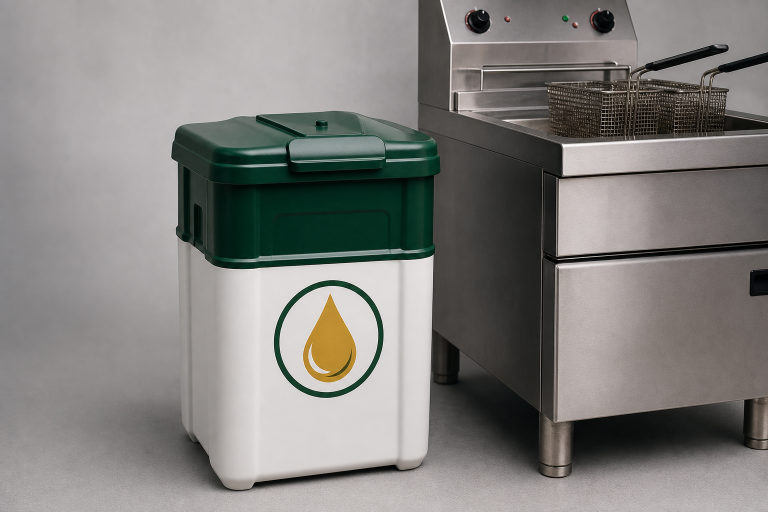
- Label the container clearly so employees know it is for used cooking oil only.
- Do not fill beyond the container’s intended capacity.
- Check lids, valves, hoses, and container walls on a regular schedule.
- Keep the surrounding ground or floor clean and free of obstacles.
- Position the container away from traffic that could strike or tip it.
How To Keep Recovered Oil Clean
Clean oil is simpler to store and more useful for recovery. When the kitchen’s normal process allows it, filtering out larger food particles before transfer can help. More importantly, staff should never use the oil container for mop water, food waste, cleaning chemicals, or other liquid waste.
Quick manager checklist
- Make sure every shift knows what belongs in the container.
- Keep water and wash-down activities away from the oil-storage area.
- Separate fryer oil from grease-trap waste and general trash.
- Ask employees to report a suspected contamination event before the next pickup.
- Review repeat problems, then correct the source through placement, labeling, or training.
Building A Reliable Collection Routine
A dependable pickup schedule should reflect actual volume rather than guesswork. A small café may produce oil gradually, while a hotel kitchen, school cafeteria, or high-volume restaurant may see sharp changes during weekends, events, or seasonal menu shifts. Track those patterns for several weeks, then coordinate collection timing around delivery windows and food-preparation schedules.
- Estimate average weekly oil output.
- Note seasonal peaks, special events, and menu changes.
- Assign one person to inspect the container before pickup.
- Keep pickup dates and service records in one accessible place.
- Adjust the routine before the container becomes consistently overfilled.
Recycling, Renewable Fuel, And Other Uses
Collection is not the final step. Depending on its condition and the receiving processor, recovered oil can be refined for uses that include biodiesel, renewable diesel, and certain industrial products. Federal renewable-fuel policy also continues to shape part of this market, and kitchen managers who want to monitor policy changes can review the EPA’s Renewable Fuel Standard updates. The practical takeaway is simple: a properly separated fryer-oil stream can remain a recoverable material instead of becoming a disposal problem.
Records, Training, And Local Rules
Simple documentation supports a consistent operation. Keep pickup receipts, container inspection notes, spill reports, and employee training records together. Give new employees a short written procedure covering cooling, transfer, storage, spill response, and reporting. Review it after equipment changes, staffing changes, major menu updates, or a noticeable increase in fryer volume. If local health, sewer, fire, or waste-handling requirements are unclear, ask the relevant local authority for guidance.
Common Mistakes To Avoid
- Mistake: Pouring oil into a sink or drain. Better choice: Transfer it to the designated oil container.
- Mistake: Moving oil while it is still too hot. Better choice: Follow the facility’s cooling and transfer procedure.
- Mistake: Leaving a container open or overfilled. Better choice: Close the lid and schedule service based on actual volume.
- Mistake: Mixing in water, chemicals, or food waste. Better choice: Keep each waste stream separate.
A Simple Action Plan For Kitchen Managers
- Inspect the current storage area for leaks, clutter, and traffic hazards.
- Measure average weekly oil production.
- Remove contamination sources near the transfer and storage areas.
- Create a one-page handling procedure.
- Train every employee who drains or transfers fryer oil.
- Set regular inspection and collection intervals.
- Review records monthly and address recurring issues.
The Bottom Line
Responsible oil recovery is built from ordinary habits carried out consistently: safe transfers, closed and well-placed containers, clean oil streams, trained staff, and dependable records. When those habits are part of the daily routine, commercial kitchens can reduce avoidable safety and cleanup problems while helping used cooking oil move toward productive new uses.
