

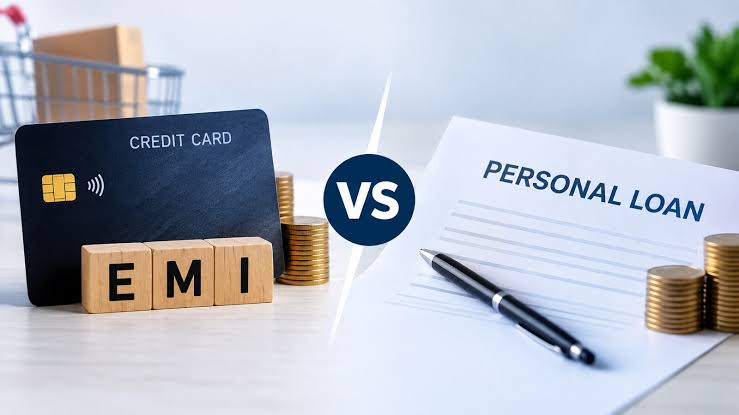
Individuals can manage their expenses, large or small, with the help of a personal loan and a credit card; however, both of them work differently. While the former allows borrowers to use funds flexibly and repay within the tenure, the latter allows them to convert eligible purchases into installments. Choosing the correct option depends on the expenses, interest rate charged, applicable fees, repayment period, and current financial situation.
Introduction
Medical expenses, urgent home renovations, educational fees, travel expenses, and other major purchases are some of the large expenses that actually put pressure on the budget and finances of an individual. While draining the savings and paying the entire amount to cover these costs is not always advisable, spreading the costs over time seems like a better option. This is where people consider two common options: personal credit and credit cards.
While both are good options, choosing one over the other requires users to compare them closely and consider monthly instalments and other factors. What influences the overall borrowing cost is the interest rates, processing fees, repayment flexibility, limits, and other additional fees charged. To ensure you make a better choice and avoid putting an unnecessary pressure, it helps to learn about personal loan vs credit card EMI.
What Is a Personal Loan?
An unsecured loan where users are not required to pledge any asset as collateral and can use funds for any of their expenses is referred to as a personal finance or loan. Lenders transfer the eligible loan amount to borrowers’ bank accounts, and the same amount, along with the interest, will be repaid in EMIs over the agreed tenure.
While digital lenders have made the loan application process easy, the loan amount offered and interest rate charged depend on certain factors like credit profile, income, financial obligations, and employment stability.
What Is Credit Card EMI?
Allowing users to convert their purchases or outstanding transactions into monthly installments, credit card EMIs prevent users from paying for the entire purchase sum in one cycle and repay it over the selected period. However, there is a condition that the card can only be used for eligible purchases that are to be made at partner stores or online transactions.
Key features of an EMI credit card include:
- Rather than using a card for generic cash requirements, these are used for making specific purchases.
- With applicable interest and charges, the sum is divided into EMIs.
- Users are offered a card limit that blocks a portion of the available limit until they make repayments.
Personal Loan vs Credit Card EMI: What Are the Key Differences?
Before you choose to do a personal loan comparison, here are some of the differentiating factors between the two options:
1. Purpose of Borrowing
A personal financing is chosen by users when they need flexibility in the use of funds. Lenders transfer funds to users’ bank accounts, giving them flexibility of use for eligible financial requirements.
On the other hand, credit cards are used to make purchases of eligible products, whether it is buying an appliance, an electronic item, or any other item.
2. Loan Amount and Credit Limit
Lenders assess the creditworthiness and eligibility of the applicant based on multiple factors and approve the loan application, making it suitable for expenses that you cannot make using a credit card.
The EMI of a credit card depends on the limit that is available to you, as a big purchase may not be made using the card.
3. Interest Rates and Additional Charges
The cost of borrowing may differ depending on lenders and the profile of the applicant. This is why it is advised for users to compare interest rates, processing fees, and other charges when choosing a personal loan.
In credit cards, the rate differs as per the card issuer, and before making an application, make sure you check for conversion fees, GST, and other charges related to early repayments.
4. Repayment Tenure
While a lender offers flexibility in choosing repayment tenure in personal financing, they help users to choose a period that best suits their financial needs.
Tenures offered in credit cards are usually determined by the card issuer and may even offer fewer options.
5. Impact on Your Credit Profile
Missing payments on either borrowing option can negatively impact your credit score. So, it is important that you repay the EMIs on time and improve your credit score.
Which Option Is Better for Large Expenses?
The right choice usually depends on the sum you actually need, repayment capacity, and the nature of the expense.
Opt for a personal loan:
- You need flexibility in the use of funds, especially to make big purchases.
- You need an amount that is higher than your credit card limit.
- You prefer a tenure that is offered by the loan lender.
Choose credit card EMI:
- You want to make a specific purchase that is eligible for card usage.
- Your purchase amount falls within the credit limit.
- You are getting an EMI at a no-cost arrangement.
Conclusion
Choosing between a personal loan and credit card depends on the amount required, purpose of borrowing, interest rate, fees, and repayment flexibility. Credit card EMI can work well for eligible purchases, while a personal loan may offer greater flexibility for broader financial requirements. Compare the complete borrowing cost before making a decision.
Finnable offers instant loans at competitive rates, flexible repayment tenures, and quick disbursements, subject to eligibility and approval. Its online EMI calculator helps estimate monthly repayments, making it easier to plan borrowing. Finnable also provides a completely free credit score check feature with no hidden fees or impact on your credit rating.
